The Store Process
A robust storage appliance running StorTIER capable of creating storage pools, exporting Volumes of differing protocols while securely protecting the data from any h/w or s/w issues
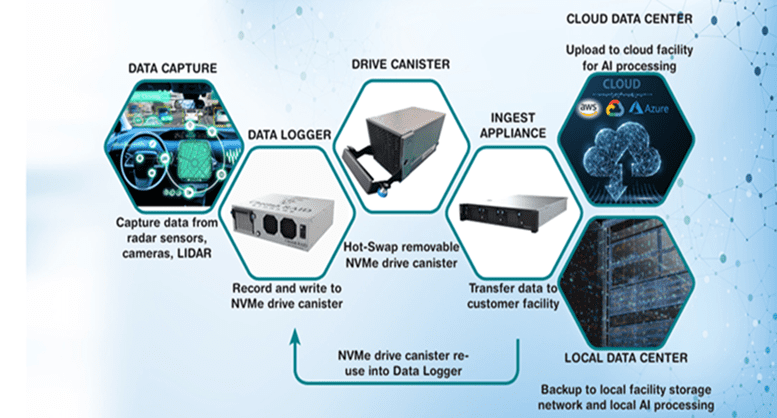
- Captures Sensor Data from Diverse Sources: The logger can connect with and receive data from many types of sensors and industrial equipment. It supports standard industrial protocols like OPC-UA, EtherNet/IP, Video Cameras, CAN Bus, LIDAR, RADAR and Modbus to integrate with existing equipment in a factory or autonomous solutions.
- Stores Data Locally at the Edge: The device stores the captured data on-site, closer to where the data is generated. This ensures data is not lost even if the connection to the cloud is interrupted. Local storage also supports applications that require near-real-time data analysis..
- Filters and Processes Data at the Edge: Instead of sending all raw data to the cloud, the logger can process, aggregate, and analyze data locally. This approach minimizes the amount of data transferred to the cloud, reducing bandwidth usage and cloud storage costs.
Autonomous Example
“Capture, store, and manage sensor data from diverse sources. Designed for IoT and Industry 4.0 / 5.0 environments, our Edge Data Logger securely stores data locally and pushes key metadata to the cloud for further analysis.”
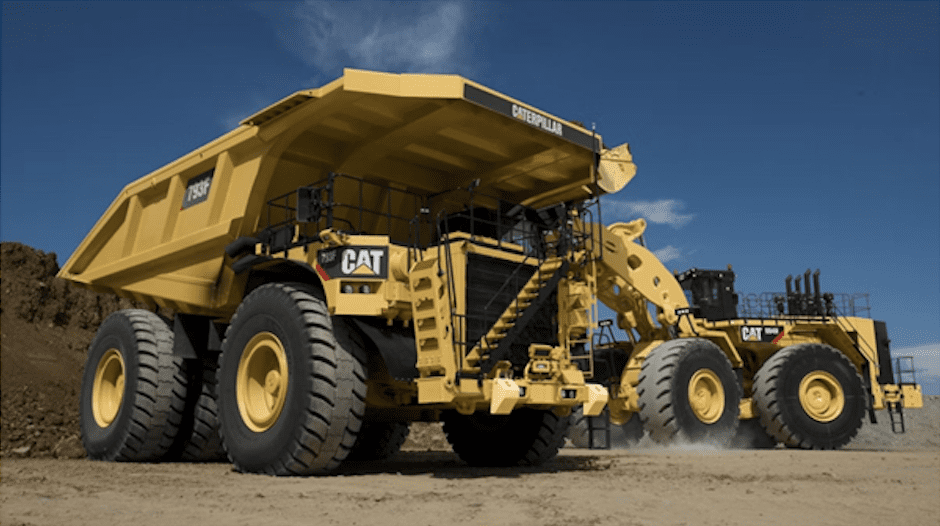
“Capture, store, and manage sensor data from diverse sources. Designed for IoT and Industry 4.0 / 5.0 environments, our Edge Data Logger securely stores data locally and pushes key metadata to the cloud for further analysis.”
The Backup Process
Once captured, the raw data must be processed and cleansed to remove inconsistencies and errors. This is crucial because poor data quality can lead to inaccurate conclusions from any analysis.
- Pushes Key Metadata to the Cloud: Once data is processed locally, the logger sends the most important information or "metadata" to a cloud-based platform. Here, it can be used for large-scale analysis, training machine learning models, and generating long-term trends.
- Enables Industry 4.0 and 5.0 Environments: The logger is a critical component of Industrial Internet of Things (IIoT) applications. It enables real-time monitoring, predictive maintenance, and quality control by integrating operational data with cloud-based analytics.
Example Applications
- Manufacturing: A data logger can collect data on temperature, vibration, and energy consumption from machinery on a factory floor. It stores the full dataset locally but only sends performance metrics (e.g., Overall Equipment Effectiveness) and anomaly alerts to the cloud for monitoring and prediction.
- Agriculture: In a greenhouse, an edge logger can monitor local sensors for humidity, temperature, and soil moisture. It can use this data for automated, local tasks like triggering irrigation, while simultaneously sending trends to a central server for overall crop analysis.
- Logistics and Cold Chain: IoT data loggers track conditions like temperature and humidity for high-value cargo in transit. With wireless connectivity, they automatically upload data to the cloud, allowing for real-time tracking and alerts if conditions go outside of the accepted range.